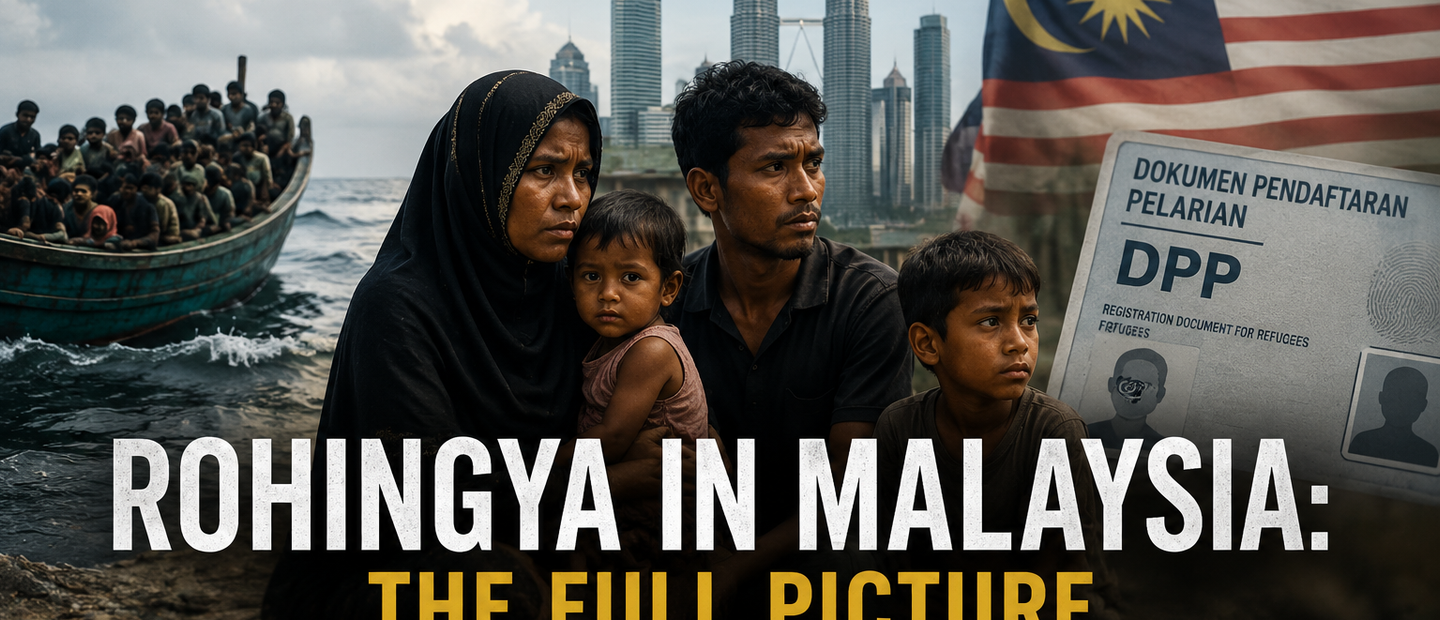
Rohingya in Malaysia: The Full Picture
How a local dispute became a national flashpoint — and what is actually true
What happened
A local sanitation complaint in Selayang Baru involving an Eid al-Adha sacrifice sparked online controversy, although authorities never confirmed who was responsible. The issue escalated after an anonymous petition to remove Rohingya from Malaysia gained over 424,000 signatures and was accompanied by a wave of false or unverified claims on social media. Meanwhile, the more significant development was the government's launch of the new biometric DPP refugee registration system, which replaces UN refugee cards and may eventually be linked to legal work opportunities for registered refugees.
Why it matters
This issue matters because it involves both a humanitarian crisis and a policy challenge. Thousands of Rohingya continue to risk their lives at sea, while Malaysia must decide whether refugees remain in an informal system or are integrated through regulated work and registration. The way Malaysia balances security, economic needs, and compassion will shape both social cohesion at home and the country's reputation abroad.
Who's affected
Rohingya refugees, who face legal uncertainty, limited access to work, education, and healthcare, and growing public hostility. Malaysian residents and local communities are also affected, as they are concerned about public services, employment competition, and social cohesion. The Malaysian government must manage migration, security, and humanitarian responsibilities, while Malaysia's international reputation is influenced by how it handles the issue.
Key points
- The 2026 controversy was triggered by an unverified local complaint, not a confirmed crime. A sanitation dispute in Selayang escalated into a national issue largely through social media amplification.
- Much of the viral content surrounding the Rohingya issue was false, misleading, or unproven. Claims about cattle purchases, land demands, rising crime, and citizenship privileges lacked evidence or were debunked.
- The Rohingya are stateless refugees fleeing persecution in Myanmar. They cannot simply be "sent home" because Myanmar does not recognize them as citizens.
- Most Rohingya in Malaysia live without legal status. They generally cannot work legally, attend public schools, or access affordable healthcare, leaving many vulnerable to exploitation and detention.
- Malaysia is introducing a new refugee registration system (DPP). The government aims to improve migration management and may eventually link registration to legal work opportunities, although no work-rights policy has been approved yet.
- The issue affects Malaysia's social cohesion and international reputation. How the country balances law enforcement, humanitarian responsibilities, and misinformation will shape both domestic trust and global perceptions of Malaysia.
Main story
The spark: a dispute in Selayang
The 2026 flashpoint began with something small and local. In late May, residents in Selayang Baru, on the northern fringe of Kuala Lumpur, complained that a Rohingya community's Eid al-Adha (korban) sacrifice had left blood and animal waste in roadside drains. The complaint spread quickly online — but it is important to be precise: no municipal or police investigation has confirmed who was actually responsible, and similar sanitation complaints around Hari Raya korban are not unique to any one community. What turned a drain-cleaning grievance into a national story was not the incident itself, but what happened next on social media.
The viral storm: a petition and a flood of claims
Within days, a Change.org petition titled "Remove Rohingya from Malaysia," started by an anonymous account calling itself "Aku Anak Malaysia," began climbing. It reached more than 424,000 signatures (some outlets rounded it to "nearly half a million") before Change.org suspended it for breaching the platform's rules against hateful content. Around it swirled a storm of claims: that Rohingya had bought 70 cattle worth RM700,000 for the sacrifice; a slickly produced poster in which a fictitious "President of Rohingya Malaysia" supposedly demanded "Selayang is enough for us"; and viral footage said to show Rohingya "taking over" a building in Hulu Langat. As later sections show, the most inflammatory of these were false or unproven — but they travelled far faster than the corrections. Signatures, it is worth noting, were verified only by email, not by nationality, so the count is not a measure of Malaysian public opinion.
The government's response: a new registration system
While the petition trended, the government was advancing a structural change that will matter far longer. On 1 January 2026 it launched the Dokumen Pendaftaran Pelarian (DPP) — a biometric refugee-registration system built by MIMOS under National Security Council Directive 23 — with its first operational phase beginning on 1 June. The DPP replaces the UN refugee card as the only document Malaysia officially recognises, reducing UNHCR's role to resettlement referrals. The Home Ministry describes it as a tool for "migration control, not citizenship," and has stressed it confers no permanent residency. A separate, much-discussed proposal to let registered refugees work legally in labour-short sectors was expected to go to Cabinet in mid-June — but as of writing it had not been approved or enacted; it remains a proposal, not law. Human Rights Watch and Fortify Rights have welcomed the move toward order while pressing for privacy safeguards, an appeals process, and protection against deportation.
Keep reading
Sign in to finish this story
The rest of this story — plus community voices, perspectives, sources, and stakeholder positions — is for registered readers. One click with Google.
Sign in to continueFree, no spam, no ads. We only use this to remember your saved stories and the topics you follow.