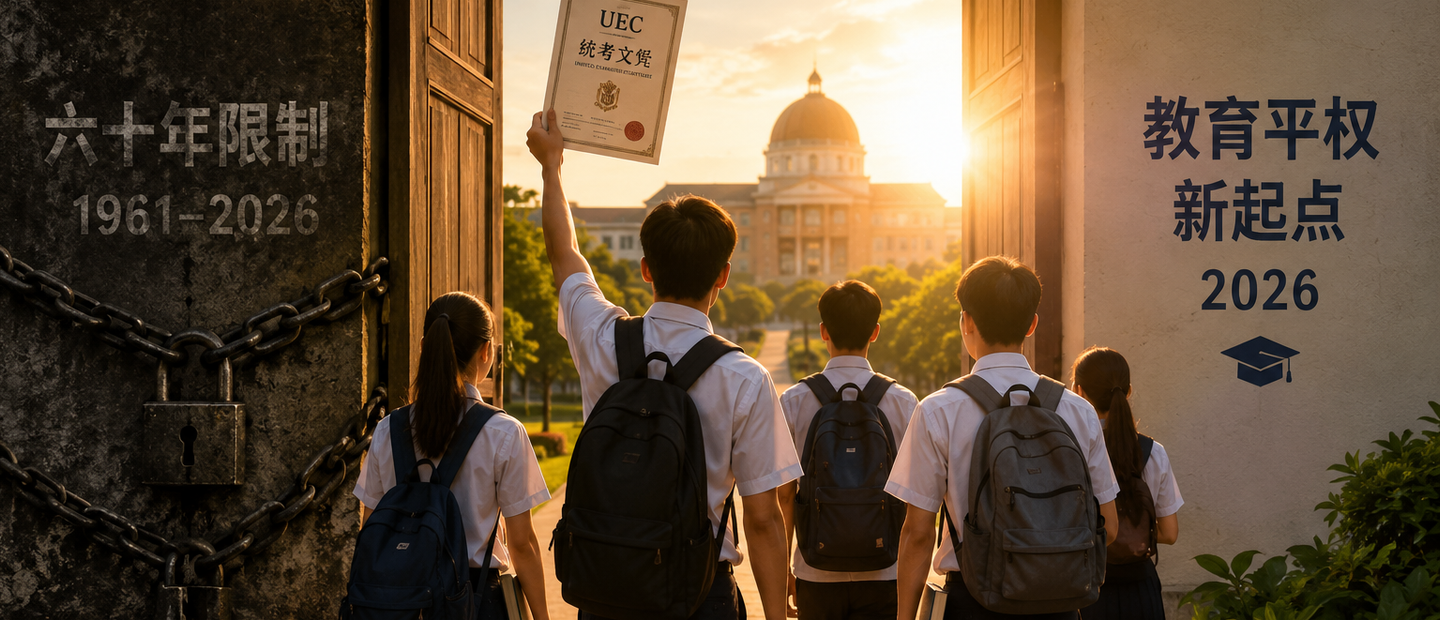
The Sixty-Year Stalemate of the Unified Examination: An In-Depth Analysis of a Historic Breakthrough
What happened
Malaysia's government formally opens applications for UEC qualification holders to local public universities in 2026, breaking a 60-year restriction on tertiary education and giving the majority of independent Chinese school students a clear pathway to enter public universities for the first time.
Why it matters
This is regarded as a historic breakthrough in Chinese education development, not only responding to the long-standing calls from the Chinese community for educational equality, but also expected to reduce the brain drain of outstanding independent school graduates flowing overseas due to limited local tertiary education opportunities.
Who's affected
About 80,000 independent Chinese secondary school students nationwide, independent Chinese secondary school graduate families, Chinese education groups, as well as Malaysia's higher education system and labour market which will require more local talent in the future.
Key points
- By 2026, UEC students will be permitted to apply to public universities
- Independent Chinese secondary schools originated from the 1961 education reform
- UEC enjoys high international recognition, yet has long been unrecognised locally
- The new plan adopts a 'dual-track system'
- The government chose to recognise the 'pathway to further studies' rather than directly recognise UEC
- Breakthroughs have emerged, but the controversy has not ended
Main story
On 14 May 2026, a circular from Malaysia's Ministry of Higher Education quietly opened a door that had been sealed for sixty years. On this day, the Cabinet formally approved Chinese independent secondary school (independent school) graduates with Unified Examination Certificate (UEC) qualifications to enter local public universities (IPTA). What appears to be a simple policy adjustment is in fact a historic moment when an education equality movement spanning three generations finally reaches a turning point.
In Malaysia, an independent Chinese secondary school graduate holding a UEC diploma recognised by prestigious universities worldwide is unable to enter the doors of the country's public universities—a absurd reality that tens of thousands of independent Chinese secondary school students have faced over the past six decades. They can be easily admitted to Cambridge or Oxford, yet are barred from their own country's public universities. This systemic contradiction, like a bitter irony, raises questions about a nation's tolerance for cultural diversity.
Today, this stalemate has finally been broken. But as with all social change, this transformation is not without imperfection. Instead, it requires a relatively balanced political approach adopted between multiethnic groups. This arrangement both responds to the core demands the Chinese community has made over sixty years, and deftly navigates the most sensitive ethnic political pitfalls. This article will provide you with an in-depth analysis of the complex landscape behind this historic breakthrough, and reveal the true significance it holds.
The Way to Break the Impasse: Core Mechanisms of Solutions for 2026
The breakthrough in 2026 became possible because it found a delicate solution that could satisfy multiple stakeholders' demands while circumventing political risks.
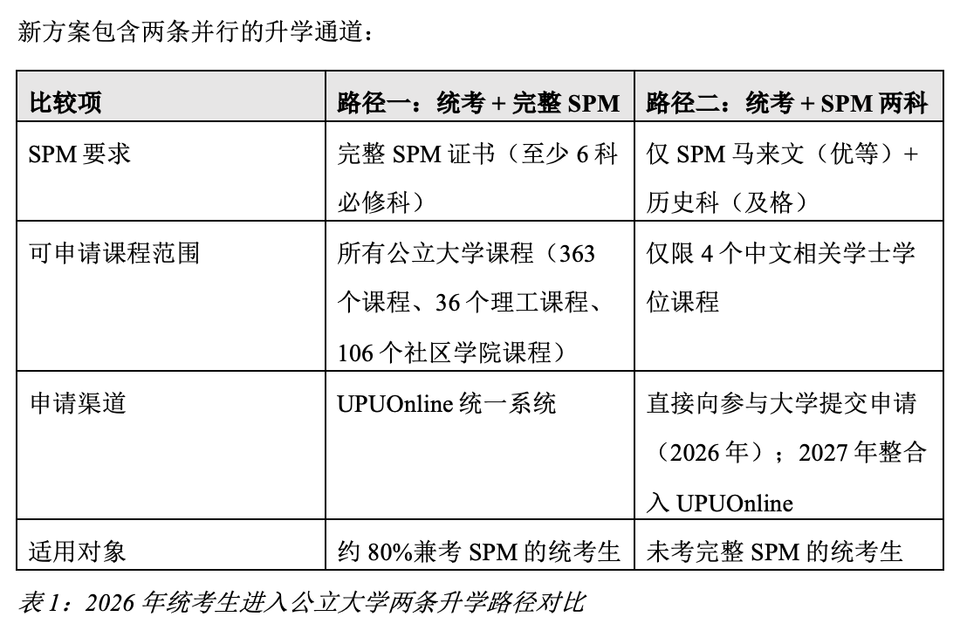
Deputy Minister of Education Wong Kah Wah pointed out that this is a key step in breaking through the biggest institutional barrier in sixty years of UEC negotiations. Transport Minister Lim Zui Bok also revealed that nationwide, approximately 80% of independent Chinese school students were originally eligible to sit for the SPM. This means that the vast majority of independent Chinese school students now have a clear pathway to enter public universities.
Political Wisdom: Recognising "Advancement Pathways" Rather Than "UEC Qualification"
The Director-General of the Ministry of Higher Education, Azlinda Azman, stated clearly at a press conference: "This is not a question of recognising the UEC syllabus. What is important is that there is a pathway." (This is not a matter of recognising the UEC syllabus; what is important is that there is a pathway).
Anwar's unity government has demonstrated sophisticated political acumen: recognising UEC qualifications means acknowledging that Chinese language can serve as a formal academic credential, directly crossing the red line concerning the status of the national language; whereas recognising "educational pathways" merely provides a technical route that can be taken, circumventing the most sensitive political flashpoint.
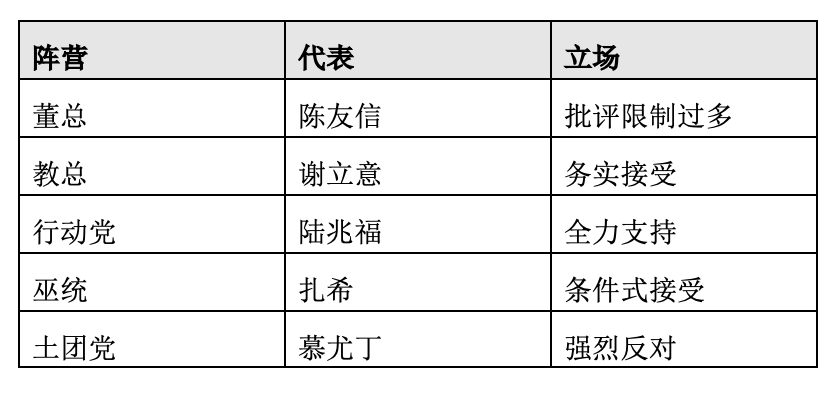
Data Pivot: A Comprehensive Scan of the Chinese Education Ecosystem
Let us comprehensively understand the current state of Chinese education in Malaysia through a set of key data.
Despite not receiving regular government allocations, the 63 independent Chinese secondary schools nationwide currently have approximately 80,000 enrolled students, relying primarily on donations from the Chinese community, fundraising sales, and corporate sponsorship to sustain operations, constituting one of the most complete systems of Chinese-language secondary education outside of China, Hong Kong, and Taiwan. This scale is also the fundamental reason why the UEC controversy has remained highly sensitive for a long time—it affects not the further studies of a small number of people, but the vital interests of tens of thousands of families.
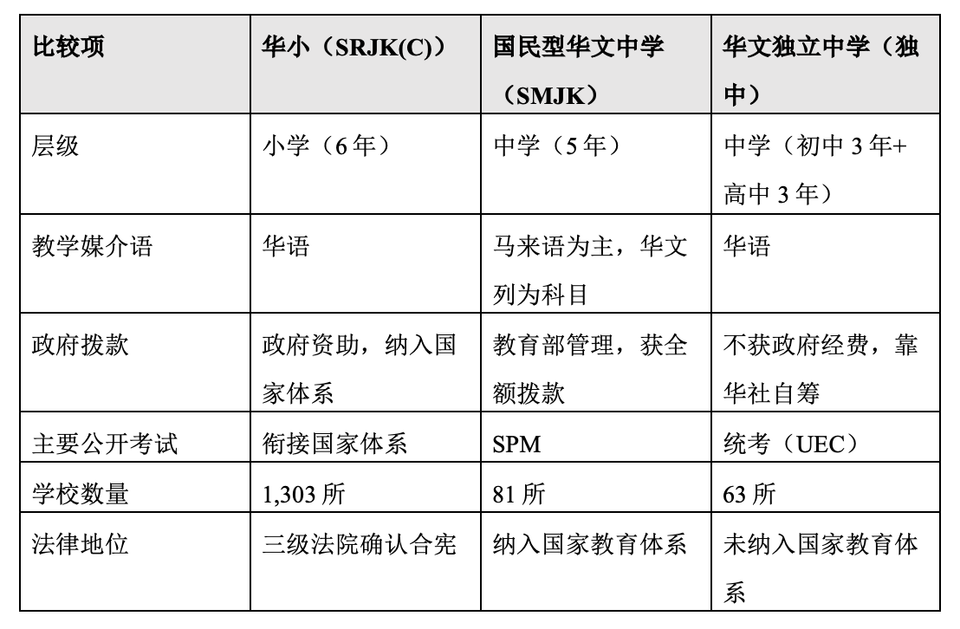
Conclusion and Outlook: The Door Has Opened, But the Road Ahead Is Long
The breakthrough in 2026 is undoubtedly historic, but it opens not an endpoint, but a new beginning.
The Fahmi government has untied an institutional deadlock, not a political knot. The real breakthrough lies in the technical adjustment of removing the "six subjects threshold" in February 2026. Every successive government has promised to "recognise the UEC", but only the Anwar government has dismantled the actual obstacles preventing implementation. In fact, from 2008 to 2018, both the BN and PH governments had included UEC recognition in their election manifestos; after PH took office in 2018, it even appointed an independent committee to conduct a special study, but all ultimately came to nothing due to constraints from communal politics.
The Path Forward: Beyond Zero-Sum Thinking
The essence of the UEC controversy is a collision of mistrust between two different ethnic cultures. The Chinese community fears the erosion of mother-tongue education, while Malay society worries about the weakening of the national language's status. Neither of these fears is right or wrong, but they have been repeatedly fed by politicians over the past sixty years, turning into noise that each side can no longer hear.
The path ahead requires moving beyond zero-sum thinking. We should recognize that a nation's strength lies not in eliminating differences, but in embracing diversity; not in pursuing uniformity, but in harmonious coexistence.
As Lim Lian Yew said: "The best answer to destruction is construction." Sixty years later, construction has finally arrived. But how wide this newly opened door can swing and how long it can remain open will depend on whether Malaysian society as a whole can find a common ground that accommodates both fears — the fear of cultural erosion and the fear of the nation falling apart.
Keep reading
Sign in to finish this story
The rest of this story — plus community voices, perspectives, sources, and stakeholder positions — is for registered readers. One click with Google.
Sign in to continueFree, no spam, no ads. We only use this to remember your saved stories and the topics you follow.