TopicsPolitician AnalysisSaifuddin Abdullah
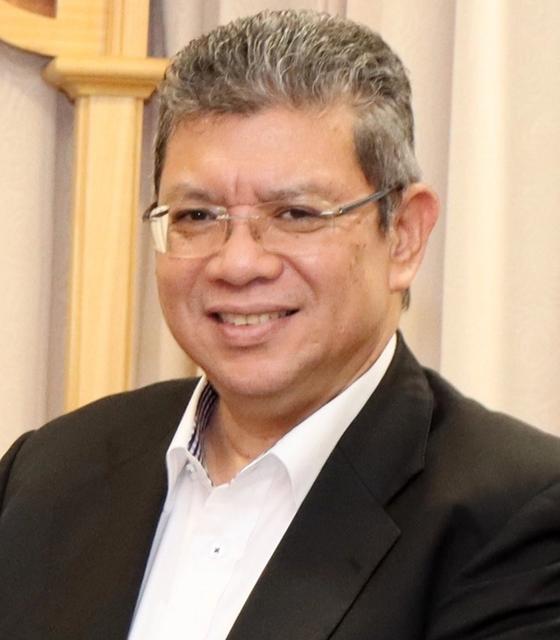
Saifuddin Abdullah
- Party
- WAWASAN · Sabah Vision Party
- Constituency
- Indera Mahkota
- State
- Pahang
Why this matters to you
As the MP for Indera Mahkota — a mixed-ethnicity constituency in Kuantan, Pahang — Saifuddin sits in Parliament as an opposition backbencher under WAWASAN, meaning he votes against the current Anwar Ibrahim government on confidence matters and can scrutinise government bills but does not hold executive authority over federal spending or policy delivery in his constituency. His public advocacy for a review of income-group classifications (B40/M40/T20) is directly relevant to how subsidies and aid are distributed to Indera Mahkota residents, particularly lower-income households and informal workers. As Secretary-General of the newly formed WAWASAN party, his political energy in 2026 is substantially directed toward coalition-building ahead of the next general election rather than committee or ministerial work.
Summary
Saifuddin Abdullah is the Member of Parliament for Indera Mahkota, Pahang, and Secretary-General of Parti Wawasan Negara (WAWASAN), having held ministerial office under three separate prime ministers — most notably as Minister of Foreign Affairs under Mahathir Mohamad and Ismail Sabri Yaakob. His career has been defined by multiple party transitions, from UMNO to PKR to Bersatu, before being sacked by Bersatu in January 2026 and joining WAWASAN in June 2026. He is currently an opposition MP advocating for political reform, multiracial centrism, and a revision of Malaysia's income-group subsidy framework.
Biography
Saifuddin bin Abdullah (born 27 January 1961, Mentakab, Pahang) is a Malaysian politician who has served as Member of Parliament for Indera Mahkota, Pahang, since May 2018 [1]. He attended the Malay College Kuala Kangsar before obtaining a Bachelor of Arts (Hons) from Universiti Malaya and a Certificate in Management from Harvard University [2]. Before entering elected politics, he served as president of the Malaysian Youth Council and later as chief executive officer of the Global Movement of Moderates [2]. He began his parliamentary career winning the Temerloh seat under UMNO and Barisan Nasional in GE12 (2008), serving as Deputy Minister of Higher Education and Deputy Minister of Entrepreneur and Cooperatives Development until he lost the seat in GE13 (2013) by 1,070 votes to a PAS candidate [1]. He resigned from UMNO in 2015 and joined PKR [1]. In GE14 (2018) he won Indera Mahkota under Pakatan Harapan, and was appointed Minister of Foreign Affairs under Prime Minister Mahathir Mohamad [1]. During the February 2020 Sheraton Move political crisis he quit PKR and subsequently joined Bersatu, serving as Minister of Communications and Multimedia under Muhyiddin Yassin, then returning as Minister of Foreign Affairs under Ismail Sabri Yaakob until November 2022 [1]. In GE15 (2022) he retained Indera Mahkota under the Perikatan Nasional-Bersatu ticket with 34.6% of the vote [3]. Bersatu dismissed him effective 6 January 2026 following an internal disciplinary process [4]. He subsequently aligned with former Bersatu deputy president Hamzah Zainudin's Reset movement and on 21 June 2026 was named Secretary-General of Parti Wawasan Negara (WAWASAN) [5].
Known for
Saifuddin is known for a long ministerial career spanning three separate administrations — as Foreign Affairs Minister under Mahathir Mohamad and Ismail Sabri Yaakob, and as Communications and Multimedia Minister under Muhyiddin Yassin. He has crossed party lines multiple times over his career, moving from UMNO to PKR to Bersatu and, following his January 2026 sacking from Bersatu, to WAWASAN as its founding Secretary-General. He has consistently advocated for multiracial, centrist politics and anti-corruption reform as defining features of his public positioning.
Political positions
Saifuddin has publicly articulated support for a 'new national consensus' framework, which he describes as built on three pillars: shared goals, shared prosperity, and compassionate governance [6]. He has called for a review of the B40, M40, and T20 income classification system, arguing that the informal economy and precarious labour are insufficiently captured under current categories, and has flagged food security, housing, and income guarantees as top national development priorities [6]. On foreign policy, he has maintained Malaysia's opposition to Israel's actions in Gaza and supported the Palestinian cause during his time as Foreign Minister and since [7]. In 2011, while a BN deputy minister, he publicly criticised his own government's handling of the Bersih 2.0 rally [1]. He has positioned himself as an advocate for clean politics, rejecting patronage and vote-buying, and has described the WAWASAN project as a nation-building rather than party-survival exercise [6].
References
Education
Before politics
- Pre-2008Served as Secretary-General and later President of the Malaysian Youth Council.⛓
- Post-2013After losing his parliamentary seat in GE13, joined Universiti Malaya as a research fellow. Resigned in 2014 in protest at the forced removal of a professor whose research was critical of the government.⛓
- Post-2013Served as Chief Executive Officer of the Global Movement of Moderates (GMM).⛓
Political career
- March 2008Elected Member of Parliament for Temerloh under UMNO/Barisan Nasional in GE12. Appointed Deputy Minister of Higher Education II.⛓
- 2008–2013Served as Deputy Minister of Higher Education II and later Deputy Minister of Entrepreneur and Co-operatives Development under Prime Ministers Abdullah Ahmad Badawi and Najib Razak.⛓
- May 2013Lost the Temerloh parliamentary seat in GE13 to a PAS candidate by a margin of 1,070 votes.⛓
- 2015Resigned from UMNO and joined the People's Justice Party (PKR), citing disagreement over the government's handling of the 1Malaysia Development Berhad (1MDB) scandal.⛓
- May 2018Won the Indera Mahkota parliamentary seat under Pakatan Harapan (PKR) in GE14 with 37.0% of the vote.⛓
- July 2018Appointed Minister of Foreign Affairs under Prime Minister Mahathir Mohamad in the Pakatan Harapan administration.⛓
- February 2020Quit PKR during the 'Sheraton Move' political crisis alongside deputy president Azmin Ali and other MPs, forming an independent parliamentary bloc. The Pakatan Harapan government subsequently collapsed.⛓
- March 2020Appointed Minister of Communications and Multimedia under Prime Minister Muhyiddin Yassin in the Perikatan Nasional administration.⛓
- August 2021Reappointed as Minister of Foreign Affairs under Prime Minister Ismail Sabri Yaakob following the collapse of the Muhyiddin government.⛓
- November 2022Retained the Indera Mahkota seat in GE15 under the Perikatan Nasional (Bersatu) ticket with 34.6% of the vote and a majority of 8,399. The BN administration of Ismail Sabri collapsed following GE15.⛓
- January 2026Sacked from Bersatu effective 6 January 2026 by the party's disciplinary board, which found he had violated Clause 9.1.4 of the party constitution. He became an independent MP. The sacking followed his public calls for Bersatu president Muhyiddin Yassin to resign.⛓
- June 2026Named Secretary-General of Parti Wawasan Negara (WAWASAN) at the party's extraordinary general meeting in Petaling Jaya, following the party's takeover by former Bersatu deputy president Hamzah Zainudin as president.⛓
Election history
Stance evolution
Public statements grouped chronologically. The party tag shows which party the politician was contesting under at that point.
- 2026WAWASAN
Reset means correcting what is wrong, improving what is already good, and rebuilding what is broken.
The reassessment of the B40, M40, and T20 classifications will be considered because the informal economy and some forms of labour akin to modern-day slavery are not being taken into account.
I will appeal.
Perspectives on key issues
- VerifiedFactsSaifuddin Abdullah has served as a Cabinet minister under three different prime ministers across three different administrations (Mahathir, Muhyiddin, Ismail Sabri) and has been a member of four political parties — UMNO, PKR, Bersatu, and WAWASAN — over the course of his career.⛓
- GovernmentBersatu's disciplinary board found that Saifuddin had violated Clause 9.1.4 of the party constitution, reportedly linked to his calls for party president Muhyiddin Yassin to resign. Bersatu Youth had previously accused him of 'malicious intent to damage the party.'⛓
- OppositionSaifuddin has claimed that Bersatu denied him a fair disciplinary process, including his request to summon Muhyiddin Yassin for testimony at the November 2025 disciplinary board hearing.⛓
- PublicSaifuddin has used his Merentas Ruang column in Sinar Harian and public statements on social media platform X to articulate his political positions on governance reform, income inequality, and the Reset movement, reaching a significant public audience.⛓
Sources
Every URL the AI used to draft this profile, for editor and reader verification.
- en.wikipedia.org
- wikidata.org
- commons.wikimedia.org
- commons.wikimedia.org
- bernama.com
- bernama.com
- election.thestar.com.my
- election.thestar.com.my
- thestar.com.my
- thestar.com.my
- malaymail.com
- malaymail.com
- malaymail.com
- freemalaysiatoday.com
- freemalaysiatoday.com
- freemalaysiatoday.com
- freemalaysiatoday.com
- freemalaysiatoday.com
- freemalaysiatoday.com
- freemalaysiatoday.com
- malaysiakini.com
- malaysiakini.com
- nst.com.my
- sinardaily.my
- en.wikipedia.org
- parlimen.gov.my