The 30-second version
- Malaysia is a federal constitutional monarchy. There's ONE federal government (in Putrajaya, headed by the Prime Minister) and 13 STATE governments (each headed by a Menteri Besar or Chief Minister).
- You vote in TWO different elections during your life: general elections (federal) and state elections. Sometimes they happen together, sometimes separately.
- Since 2018, no single party has won a majority alone. Governments are formed by COALITIONS — alliances of parties. Three big coalitions dominate today: BN, PH, PN.
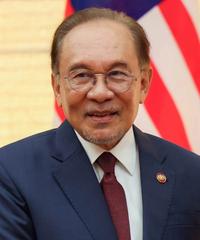
- The current Prime Minister is Datuk Seri Anwar Ibrahim (since November 2022). He leads a 'unity government' — an unusual arrangement where former rivals BN and PH govern together.
The basics
Who's actually in charge?
222
federal MPs
Dewan Rakyat — Malaysia's lower house of parliament in Kuala Lumpur.
600
state assemblymen (ADUN)
Across the 13 state legislatures. Sarawak has the most at 82; Perlis the fewest at 15.
13
states + 3 federal territories
KL, Putrajaya, and Labuan are directly federally administered.
2
houses of parliament
Dewan Rakyat (elected, 222 seats) and Dewan Negara (Senate, appointed, 70 seats).
Wait — Malaysia has a king AND a prime minister?
Yes. The Yang di-Pertuan Agong (King) is Head of State — a constitutional role, rotated every 5 years among the 9 hereditary state rulers. The Prime Minister runs the government day-to-day. The King's actions are almost always on the advice of the PM, but the King has decisive influence when Parliament is deadlocked.
What's the difference between federal and state?
Federal government controls national policy: defence, foreign affairs, income tax, national budget, main roads, immigration. State governments control land, water, forestry, local welfare, and Islamic religious affairs. That's why a Menteri Besar has real power in your daily life — school allocations, land titles, welfare aid — even though the PM gets the headlines.
The players
The three coalitions you need to know
At a glance
| Barisan Nasional (BN) | Pakatan Harapan (PH) | Perikatan Nasional (PN) | |
|---|---|---|---|
| Founded | 1974 (as an evolution of Alliance Party, ran Malaysia 1957-2018) | 2015 | 2020 |
| Main parties | UMNO (Malay), MCA (Chinese), MIC (Indian). | PKR (multiracial reform), DAP (mainly Chinese urban), Amanah (moderate Muslim). | Bersatu (Malay nationalist), PAS (Islamist). |
| Base | Malay rural + semi-urban. Historic party of government. | Urban multiracial. Middle class + non-Malay minorities. | Malay-Muslim conservative + youth in northern peninsula. |
| Current status | Part of the unity government with PH. | Part of the unity government with BN. Anwar (PM) chairs it. | Federal opposition. Governs Kelantan, Terengganu, Kedah, Perlis. |
How you get a say
Elections — the ballots that decide it all
What's a General Election (GE)?
Held roughly every 5 years, on any date the Prime Minister chooses (within the 5-year term). All 222 federal MPs are elected. Whichever coalition holds 112+ seats forms the federal government and picks the PM. The most recent GE was GE-15 in November 2022 — the current government came from that vote.
What's a State Election (PRN)?
Each state elects its own state assembly (Dewan Undangan Negeri). Six states hold state elections at the same time as GE (Melaka, Johor, Perak, Selangor, Negeri Sembilan, Pahang are usually sync'd). Others — like Kelantan and Terengganu — hold theirs separately. When a state government dissolves early, a snap PRN is called. Johor's 2026 election is one of these snap polls.
So how many times do I vote in my life?
As a rule of thumb: one GE every 4-5 years for your federal MP, and one PRN every 4-5 years for your state ADUN. Sometimes they land on the same day ("concurrent") — one trip to the polling station, two ballot papers. Sometimes separately.
Who administers elections?
The Election Commission (Suruhanjaya Pilihan Raya, or SPR). Independent constitutional body. They set dates, run polling stations, count votes, resolve disputes. You can look up your seat and polling station at spr.gov.my.
What's the difference between an MP and an ADUN?
MP = Ahli Parlimen = federal representative in the Dewan Rakyat. Elected in general elections; there are 222 of them; they vote on federal laws + federal budget. ADUN = Ahli Dewan Undangan Negeri = state representative in your state assembly. Elected in state elections; total 600 across all 13 states; they vote on state laws + state budget. You have BOTH — one MP and one ADUN — and they're often from different parties.
Why does every Malaysian have TWO representatives in Parliament?
Because Malaysia is federal. Federal MP handles federal issues (income tax, national roads, immigration, defence). Your ADUN handles state issues (land titles, water, forestry, local welfare, Islamic religious affairs). A concern about your JPJ licence goes to your MP; a concern about your kampung's road goes to your ADUN. Sometimes the same person contacts both — the split isn't always intuitive.
What does the Prime Minister actually do day-to-day?
Chairs Cabinet meetings (usually Wednesdays). Directs the ~30 federal ministers. Signs off on federal budget. Represents Malaysia internationally. Manages the coalition holding parliamentary majority — arguably the most demanding part of the job in Malaysia's fragmented multi-party landscape. Anwar Ibrahim's daily schedule as PM in 2026 includes ~15 formal meetings, 3-5 public events, plus reading time for federal papers.
How we got here
Key moments in modern Malaysian politics
The abridged timeline
31 August 1957
Independence — the Alliance Party takes over
Tunku Abdul Rahman becomes the first Prime Minister. The Alliance (UMNO + MCA + MIC) governs uninterrupted.
1974
Barisan Nasional forms
Alliance expands into BN, absorbing more component parties. BN runs the country continuously from 1974 to 2018 — 44 years.
September 1998
Reformasi begins
Deputy PM Anwar Ibrahim sacked; jailed on charges his supporters call politically motivated. The Reformasi movement — demanding political and institutional reform — is born. Shapes Malaysian politics for 25+ years.
9 May 2018
First peaceful transfer of federal power
GE-14: Pakatan Harapan (led by Mahathir + Anwar allied against BN) wins. First time BN loses a general election in 61 years. Historic.
February 2020
The Sheraton Move
PH federal government collapses when Bersatu withdraws. Muhyiddin Yassin becomes PM through a coalition realignment — not a fresh election. Political trust bruised for years.
24 November 2022
Anwar becomes Prime Minister
GE-15 delivers no majority. King Sultan Abdullah personally negotiates a coalition. Anwar Ibrahim — Reformasi leader from 1998 — is sworn in as PM after 24 years fighting for the role. BN + PH govern together in a 'unity government'.
11 July 2026
Johor state election
The biggest political stress-test of Anwar's federal government to date. Read our Johor 2026 explainer.
The names you'll hear
Key figures right now
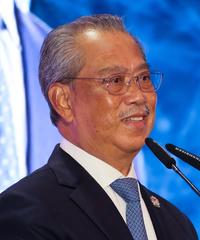
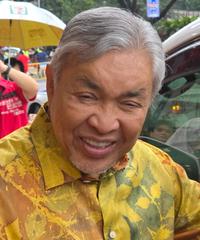
The three men shaping federal politics in 2026
The jargon buster
Terms you'll hear over and over
What is 'Reformasi'?
Reformasi (Malay for "reform") is the political movement born from Anwar Ibrahim's 1998 sacking and imprisonment. Demands: political liberalisation, judicial independence, media freedom, anti-corruption. Its supporters powered PH's 2018 win. Its long-term goal — full institutional reform — is still contested.
What's a 'Menteri Besar' vs 'Chief Minister'?
Same role, different name. 9 states (with a Sultan) call theirs Menteri Besar. The 4 without a Sultan — Melaka, Penang, Sabah, Sarawak — call theirs Chief Minister (Ketua Menteri). Both are the head of the state government.
What's 'Bumiputera'?
Bumiputera (Malay for "son of the soil") is a constitutional category covering Malays and indigenous peoples of Malaysia — including Orang Asli, Iban, Kadazan, and others. Bumiputera receive certain economic and educational preferences under the New Economic Policy — a topic that remains politically live.
What's a 'katak' or 'lompat'?
Katak (frog) refers to elected MPs or ADUNs who switch parties after being elected — 'lompat' means 'jump' in Malay. Party-hopping was central to the 2020 Sheraton Move. In 2022 an Anti-Hopping Law was passed to constrain it — but the political culture around loyalty remains fluid.
Now you know the basics — dig deeper
Malaysia's politicians directory
Every federal MP, state assemblyman, and 2026 election candidate — searchable, filterable, cited.
PM Anwar Ibrahim — full profile
Career, party history, election record, and stated positions.
The Johor election dashboard
Live seat map, all 172 candidates, ethnic composition, editorial forecast.