The 30-second version
- Johor votes on 11 July 2026 for all 56 state assembly seats — the biggest political test of Anwar's federal government to date.
- Three coalitions are competing separately: Barisan Nasional (BN, the incumbent), Pakatan Harapan (PH, Anwar's own coalition), and Perikatan Nasional (PN, the opposition). BN and PH are federal partners but chose to fight this state race alone.
- 172 candidates on the ballot. Most seats are three-cornered fights; three seats have five-way contests. A coalition needs 29 seats to form the state government and pick the next Menteri Besar.
- The result will reshape federal politics, set the tone for the Negeri Sembilan election three weeks later, and shape when Anwar calls the next general election (GE-16).
The basics
Why is Johor voting?
The road to polling day
1 June 2026
Menteri Besar dissolves the Johor state assembly
Onn Hafiz Ghazi requested dissolution; the Regent of Johor consented on behalf of Sultan Ibrahim.
27 June 2026
Nomination day — 172 candidates confirmed
All 56 seats are contested. No walkovers. The Election Commission opened the 14-day campaign period.
7 July 2026
Early voting
Military, police, and their spouses cast ballots four days ahead of the public.
11 July 2026
Polling day
The public votes. Polling stations open 8am–6pm. Counting begins at station-level immediately after.
~12 July 2026
Results announced
The Election Commission publishes official results. Whichever coalition holds 29 seats can form the government.
What triggered this election?
Onn Hafiz dissolved the state assembly on 1 June 2026 — early. The term wasn't due until 2027. Analysts read the timing as BN seeking a fresh mandate while its economy narrative is strong.
Why can't BN and PH cooperate here? They govern together federally.
Johor is BN's stronghold — they swept it in 2022 with 40 seats. BN doesn't want to share credit; PH wants to prove it can grow beyond urban seats. Fighting separately at state level is normal in Malaysia even when federal coalitions hold together.
The contest
Who's fighting?
56
seats up for grabs
All contested. No walkovers.
172
candidates on the ballot
Averages 3 candidates per seat.
32
three-cornered fights
Where BN, PH and PN all field a candidate.
29
seats to form a government
A simple majority of the 56-seat assembly.
How does this even work? What am I voting FOR on 11 July?
You vote for one candidate in your DUN seat — not for a coalition or an MB directly. Whichever coalition holds 29+ of the 56 seats forms the state government and picks the MB.
What's a 'three-cornered' or 'five-way' fight?
Multiple candidates in the same seat: three-way = BN + PH + PN. Malaysian ballots often show 3-5 names. Split votes matter — a strong third can hand victory to a plurality winner with less than 40%.
What if I'm registered in Johor but work in KL — can I still vote?
Your ballot is at your registered address's polling centre. Two options: (1) travel back to Johor on polling day (roads get busy; plan ahead); (2) apply for postal/absentee voting — but this is only for military, police, students overseas, and diplomats. Standard workers cannot vote by mail from another Malaysian state.
What makes a seat a 'safe seat' vs a 'swing seat'?
A safe seat: one coalition consistently wins by >15 percentage points across multiple elections (e.g., DAP holds most Chinese-majority urban Johor seats safely). A swing seat: margin under 5 points, could go either way (e.g., mixed suburban seats around Johor Bahru). This election has ~12 seats analysts flag as genuine swings — where all campaign attention concentrates.
Are exit polls a thing in Malaysia?
No. Malaysia's Election Offences Act prohibits publishing exit polls until polls close nationally. That's why on polling night, no forecast exists until real ballot counts start streaming from ~8pm. Unlike the US or UK, you won't see "projected winner" callouts before official results come in.
The three coalitions at a glance
| Barisan Nasional (BN) | Pakatan Harapan (PH) | Perikatan Nasional (PN) | |
|---|---|---|---|
| 2022 result | Won 40 of 56 seats. Formed the state government. | Won 12 seats. Second-largest bloc. | Won 3 seats. Distant third. |
| Seats contested in 2026 | 56 (going alone) | 56 (going alone) | 33 seats total. Bersatu 16, PAS 11, MIPP 5, Pejuang 1. Not contesting the remaining 23 seats. |
| Manifesto headline | "Maju Johor 2030" — 63 pledges anchored on continuity and infrastructure. Focus on B40 households, youth, and urban/semi-urban voters. | 10-agenda plan focused on cost of living, jobs and housing. Promised a Shenzhen-scale transformation and 250,000 new jobs. | Focused on anti-federal-government sentiment, ethnic identity, and cost-of-living critique. No unified manifesto because PAS + Bersatu run parallel campaigns. |
| Menteri Besar candidate | Datuk Onn Hafiz Ghazi (incumbent, contesting Machap). | Not named — a criticism from opponents. PH says the choice will be made post-election. | Not named. Internal split between PAS and Bersatu means no consensus figure. |
The personalities
Meet the key players
Three men shape the narrative — even if only one is on the Johor ballot
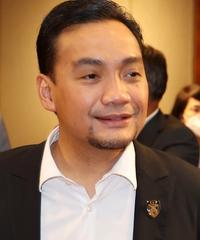
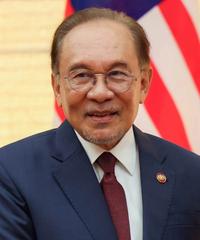
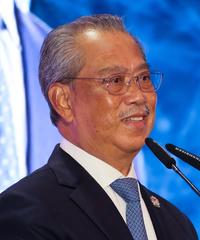
What voters are talking about
The issues on the ballot
What's Iskandar Malaysia and why does it keep coming up?
Southern Johor's massive economic development zone opposite Singapore — property, industry, cross-border services. Johor's growth engine, but the source of complaints about uneven benefit: rising rent, gentrification, and who gets the jobs.
What does "cost of living" actually mean in this campaign?
Petrol subsidies, food inflation (rice, chicken, cooking oil), Johor Bahru rent driven by Singapore-linked demand, and stagnant real wages. State governments only control some of it — the rest depends on federal policy.
Why is BN going solo instead of contesting with PH?
BN doesn't want to share credit in its stronghold. Running separately also protects BN's identity for 2022 voters who liked BN but are cool on the Madani federal coalition. Bet: a big Johor win strengthens BN's federal leverage.
The electorate
Who actually votes in Johor?
55%
Malay voters
Backbone of BN + PN support. Concentrated in rural, semi-urban Johor.
33%
Chinese voters
Traditional DAP/PH stronghold. Urban Johor Bahru, Muar, Kluang.
7%
Indian voters
Concentrated in estate belts and urban service sectors.
5%
Bumiputera + others
Orang Asli, mixed parentage, non-Malay Bumiputera.
What they are saying
Voices from the field
Voting for the first time?
What to do on 11 July
Where do I vote? How do I check?
Go to spr.gov.my → "Semakan Daftar Pemilih" → enter your IC. It shows your polling station, DUN seat, and voting stream. Or use the MySPR mobile app. Do this BEFORE polling day — moving polling stations on the day itself is not possible.
What do I need to bring?
Only your MyKad (or valid passport for overseas voters). No phone, no camera, no smart watch inside the polling booth. Wear something comfortable — queues can be long, especially between 10am-1pm.
What does the ADUN I elect actually do?
Your ADUN sits in the Johor State Legislative Assembly, votes on state laws, controls state welfare + local infrastructure budgets in your constituency, and holds the Menteri Besar accountable. State elections shape schools, hospitals, roads, and land-use — issues federal MPs can only influence indirectly.
What if I don't vote?
Voting is voluntary in Malaysia — no fine for not turning up. But state governments in Johor have historically been formed with 55-60% turnout. A single seat can be decided by fewer than 500 votes. Your ballot has more weight in a state election than in a general election, statistically.
Where the drama lives
Seats to watch on polling night
Five constituencies whose result will tell you the story of the night
N26
Machap
Kluang
Onn Hafiz's own seat. Straight fight against PH's Nor Hafiz Roslan. If the Menteri Besar loses Machap, the whole BN campaign narrative collapses — and vice versa: a big win here is a personal mandate.
N41
Puteri Wangsa
Johor Bahru
Puteri Wangsa is one of only three five-way contests. Urban Johor Bahru, ethnically mixed, high-profile personalities from every coalition plus two independents. The final margin here reads as a proxy for what suburban Johor voters actually want.
N32
Endau
Mersing
Endau is a four-cornered contest and one of BN's exposed rural seats — Malay-heavy and susceptible to PN's PAS/Bersatu appeal. If PN takes seats like Endau, it means the anti-Anwar swing is real and not just rhetoric.
N12
Bentayan
Muar
Bentayan is a Chinese-majority seat historically held by DAP. Watch the size of the DAP margin — a shrinking majority is early warning that Chinese Malaysian support for the federal government is softening.
N45
Stulang
Johor Bahru
Stulang is downtown Johor Bahru — one of the most economically exposed seats to Singapore-Johor cross-border dynamics. What voters here reward or punish reflects how the cost-of-living argument is landing in the city that feels it most.
For political followers
The 2022 baseline and where analysts see cracks
2022 result vs 2026 starting position
| Barisan Nasional | Pakatan Harapan | Perikatan Nasional | |
|---|---|---|---|
| 2022 seats won | 40 of 56 (super-majority) | 12 of 56 | 3 of 56 |
| 2022 vote share | ~43% | ~34% | ~19% |
| Change in 2026 base | Same MB, incumbency intact. Bumiputera economic message under pressure from PN. | Federal governing partner now, but no MB candidate named. Anwar personally announced 56 candidates 22 June. | PAS + Bersatu running parallel operations. Internal split reduces coordination. |
The aftermath
What happens after 11 July?
Dig deeper
The full Johor election dashboard
Live seat map, candidate list, voter breakdown, and 5 editorial key themes.
Onn Hafiz Ghazi profile
Career, party history, and the full record on the Machap seat.
Anwar Ibrahim profile
The federal figurehead PH runs behind — five election wins, one prime ministership, one Madani agenda.