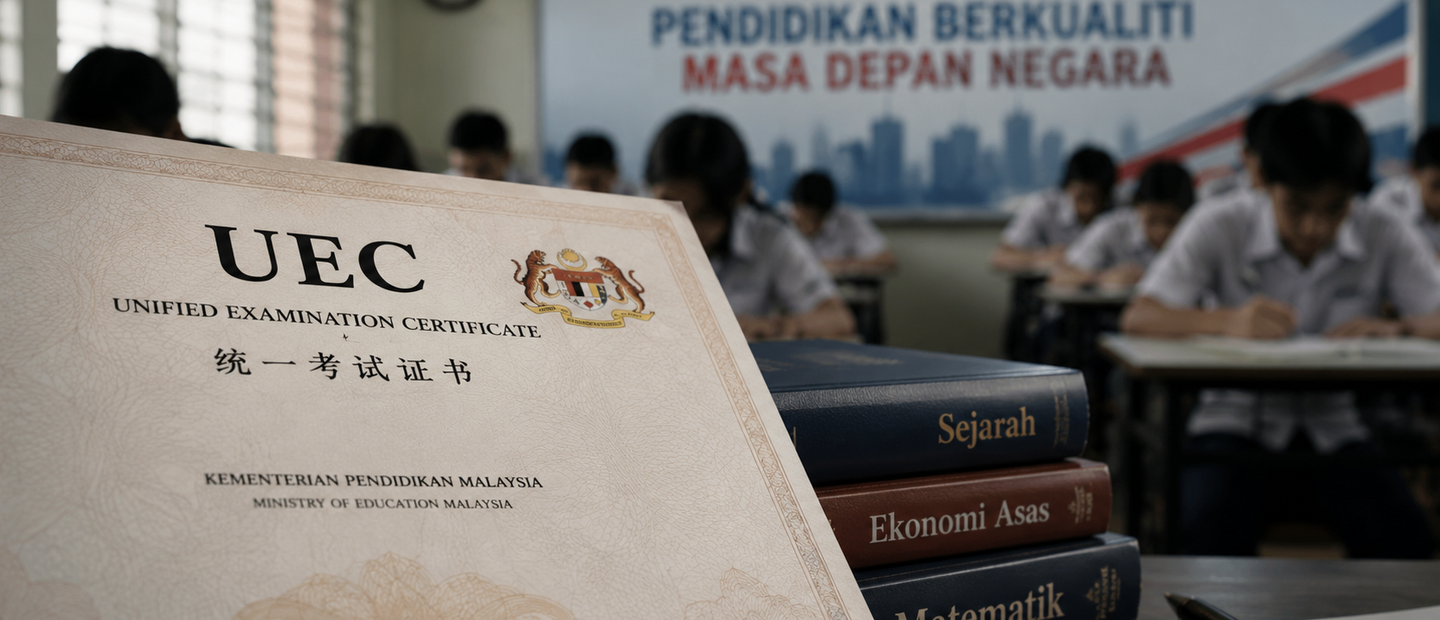
uec-hero-image
NewsEditor written · Verified

Debate Over UEC Recognition Resurfaces After Education Policy Discussion

Education groups call for clearer policy direction as political parties revisit long-standing recognition debates.

By CERAP Editorial Team·Ed. CERAP Editorial Team·28 May 2026
15-second summaryAlways visible

What happened

A renewed national discussion about UEC recognition emerged after several policymakers and education groups revisited the issue during recent education policy dialogues.

Why it matters

A renewed national discussion about UEC recognition emerged after several policymakers and education groups revisited the issue during recent education policy dialogues.

Who's affected

A renewed national discussion about UEC recognition emerged after several policymakers and education groups revisited the issue during recent education policy dialogues.

  • Education groups urged the government to provide a clearer long-term stance on UEC recognition.
  • Supporters argue recognition helps reduce brain drain and improves educational opportunities.
  • Critics remain concerned about national education standardization and language policy implications.
  • The debate continues to generate strong political and public reactions across different communities.

The Unified Examination Certificate (UEC) has once again become a focal point of national discussion following renewed conversations surrounding education reform and higher education access.

Several education organizations recently called for a more transparent government position regarding UEC recognition, arguing that uncertainty continues to affect students planning their academic futures.

Supporters of recognition argue that many UEC graduates already pursue higher education overseas and contribute significantly to Malaysia’s economy and professional workforce. They believe recognition could help retain talent within the country while reflecting Malaysia’s multicultural education landscape.

However, critics continue to express concerns over standardization within the national education framework. Some political groups argue that recognition discussions must consider national cohesion, curriculum alignment, and long-term education policy consistency.

The issue has remained politically sensitive for decades because it intersects with language, identity, constitutional debates, and public education priorities.

Analysts note that regardless of political positioning, the discussion reflects broader national questions about inclusivity, competitiveness, and how Malaysia balances diversity within its public institutions.

Students

Students face uncertainty when planning university pathways.

Parents

Parents may spend more on overseas education alternatives.

Social

Public debate influences national unity and education policy trust.

National

Talent retention affects Malaysia’s future competitiveness.

What each community is saying — and what experts and authorities add to the picture.

Malay community

Recognition needs to safeguard the place of Bahasa Melayu in higher education.

Source: loo

Chinese community

We must protect our rights on uec

Source: geogia lum

The issue requires long-term bipartisan policy clarity rather than short-term political reactions.

abc news, loo

uec shall be encouraged and pushed by the government

daily news, geogia lum

Every outlet whose reporting fed this story. Tap to read the original.

Where each stakeholder stands — and why.

Ministry of Education

Government

Stance

The recognition framework needs to align with national curriculum standards.

WhyConcerns about long-term consistency in Malaysian higher education.

Each entry is a development since this story was first published — newest first.

  1. Ministry of Education responds with formal statement on UEC review timeline.

  2. Dong Zong submits petition with 60,000 signatures to Parliament.